
Regular car maintenance is one of the simplest ways to keep your vehicle safe, reliable, and comfortable to drive. Many car problems do not appear suddenly. Small issues with tyres, brakes, engine fluids, batteries, or other components can gradually become bigger and more expensive problems if they are ignored.
Following basic car maintenance tips can help vehicle owners identify potential problems early, maintain better performance, and reduce unexpected repair costs.
Whether you use your car every day for commuting, family travel, or long-distance journeys, regular maintenance should be part of your vehicle ownership routine.
Table of Contents
Why Is Regular Car Maintenance Important?
A car contains many components that work together whenever you drive. Engine components, brakes, tyres, suspension, battery, fluids, lights, and electrical systems all require proper attention.
Regular car maintenance can help:
- Improve vehicle reliability
- Maintain safe braking performance
- Reduce the possibility of unexpected breakdowns
- Improve driving comfort
- Extend the life of important vehicle components
- Identify small problems before they become major repairs
- Maintain the overall condition of the vehicle
Skipping routine servicing may save money temporarily, but a neglected problem can become more expensive to repair later.
1. Follow the Recommended Service Schedule
One of the most important car maintenance tips is to follow the service schedule recommended for your vehicle.
The service interval can vary depending on the vehicle model, engine type, driving conditions, mileage, and manufacturer recommendations.
During regular servicing, a mechanic can inspect important components and identify issues that may not be obvious during everyday driving.
Keep records of your previous services so you know when your next service is due.
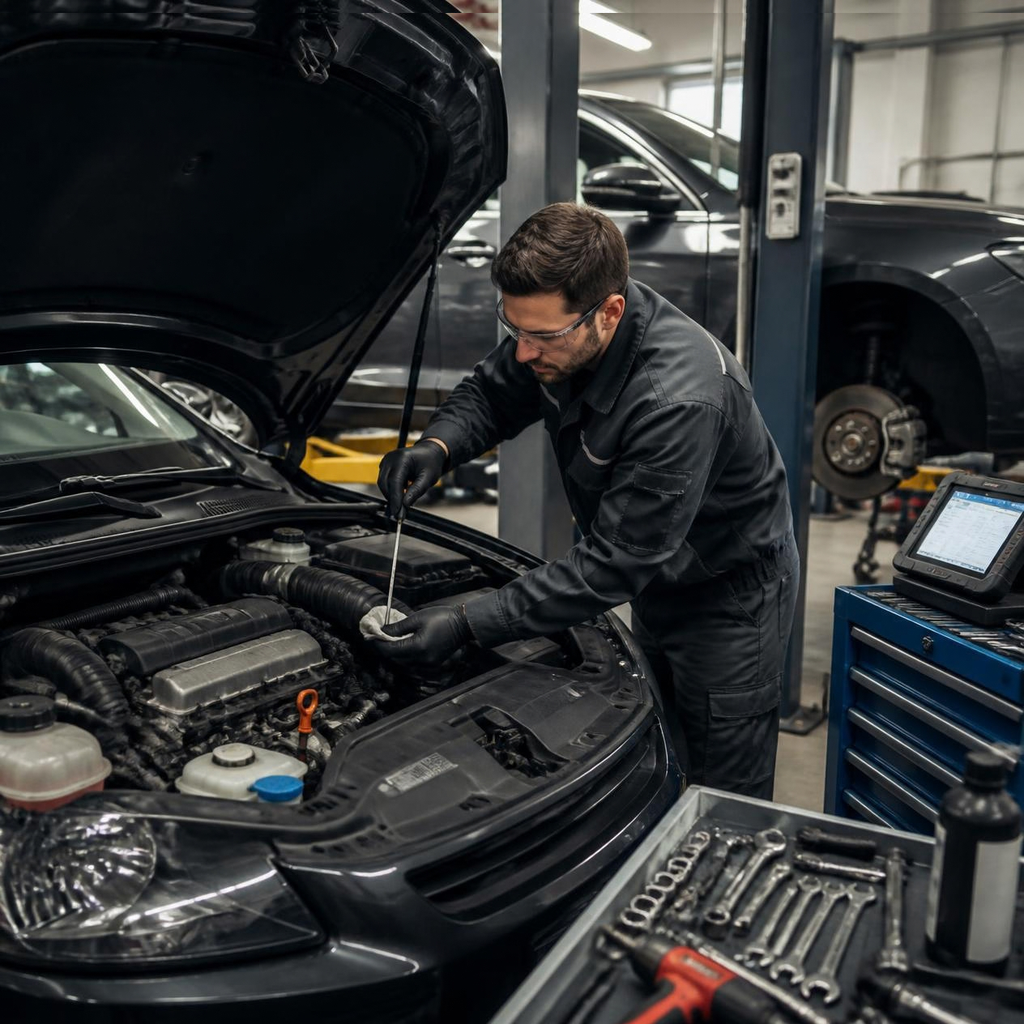
2. Check Your Engine Oil Regularly
Engine oil helps lubricate important engine components and reduces friction between moving parts.
Low, old, or unsuitable engine oil can affect engine performance and may contribute to excessive wear.
Check your vehicle owner’s manual to understand the correct oil specification and recommended replacement interval.
If you notice an oil warning light, an oil leak, unusual engine noise, or other problems, have the vehicle inspected by a qualified mechanic.
3. Pay Attention to Your Tyres
Tyres are the only parts of your car that directly contact the road, making tyre condition extremely important for safety.
Check your tyres regularly for:
- Correct tyre pressure
- Uneven tread wear
- Cuts or cracks
- Bulges
- Damaged sidewalls
- Excessive tread wear
Incorrect tyre pressure can affect handling, braking, comfort, and fuel efficiency.
It is also important to check the spare tyre periodically rather than assuming it will always be ready when you need it.
4. Do Not Ignore Brake Problems
Your braking system is one of the most important safety systems in your vehicle.
If you notice:
- Squeaking or grinding sounds
- Vibrations while braking
- A soft or unusual brake pedal
- The vehicle pulling to one side
- Longer stopping distances
you should have the braking system inspected.
Brake pads, discs, drums, brake fluid, and other components may require inspection or replacement depending on their condition.
Never ignore unusual braking behaviour simply because the vehicle is still able to stop.
5. Keep an Eye on the Battery
A weak battery can cause starting problems, especially when the battery is old or the vehicle is used infrequently.
Look for signs such as:
- Slow engine cranking
- Difficulty starting
- Dim lights
- Electrical problems
- Battery warning indicators
A professional inspection can help determine whether the battery and charging system are working correctly.
6. Check Important Fluids
Your vehicle depends on several fluids for proper operation.
Depending on your vehicle, these may include:
- Engine oil
- Coolant
- Brake fluid
- Transmission fluid
- Windshield washer fluid
- Power steering fluid, where applicable
Low fluid levels or leaks can indicate an underlying problem.
Do not simply keep adding fluid without investigating why the level is dropping. A mechanic should inspect persistent leaks or abnormal fluid loss.
7. Do Not Ignore Warning Lights
Modern vehicles use dashboard warning lights to alert drivers about potential problems.
A warning light does not always mean that the vehicle will immediately stop working. However, it should not be ignored.
If a warning light appears, check your owner’s manual and have the vehicle inspected when necessary.
Early diagnosis can sometimes prevent a relatively small issue from becoming a major repair.
8. Listen for Unusual Sounds
Your car can sometimes give you an early warning through unusual sounds.
Pay attention to:
- Grinding
- Squealing
- Clicking
- Knocking
- Humming
- Rattling
The location and timing of the sound can provide useful information to a mechanic.
For example, a sound that appears only while braking may require a different inspection from a noise that occurs while turning or accelerating.
9. Check Your Lights
Headlights, brake lights, indicators, reverse lights, and other exterior lights are important for visibility and communication with other road users.
Check them regularly and replace faulty bulbs or components as soon as possible.
Clean headlights can also improve visibility, particularly when driving at night or during poor weather.
10. Keep Your Car Clean
Vehicle cleaning is not only about appearance.
Regular exterior cleaning can help remove dirt and contaminants from the body, while interior cleaning helps maintain a comfortable driving environment.
Professional detailing can also help maintain the appearance of the vehicle’s interior and exterior.
However, cleaning should complement—not replace—mechanical maintenance.
11. Pay Attention to Changes in Driving Performance
You know how your vehicle normally feels when you drive it.
If you suddenly notice:
- Reduced acceleration
- Poor fuel economy
- Steering changes
- Excessive vibration
- Unusual braking
- Difficult starting
- Strange noises
do not ignore the change.
A vehicle that feels different from normal may need an inspection.
12. Choose Professional Car Service When Needed
Basic checks can be performed by vehicle owners, but many maintenance and repair tasks require proper tools, knowledge, and experience.
A professional auto repair workshop can inspect the vehicle, identify potential problems, and recommend appropriate repairs or maintenance.
Your garage’s services can include routine maintenance, repairs, brake-related work, detailing, and other vehicle-care requirements.
Simple car maintenance Checklist
You can use this checklist to make vehicle maintenance easier:
| Check | Recommended Action |
|---|---|
| Engine oil | Check level and follow replacement schedule |
| Tyres | Check pressure, tread and damage |
| Brakes | Watch for noise, vibration or reduced performance |
| Battery | Check starting performance and battery condition |
| Fluids | Check levels and look for leaks |
| Lights | Check headlights, indicators and brake lights |
| Warning lights | Investigate dashboard warnings |
| Wipers | Replace worn or damaged blades |
| Air conditioning | Check if cooling performance changes |
| Service schedule | Follow manufacturer recommendations |
Final Thoughts
Regular car maintenance does not have to be complicated. Paying attention to your vehicle, following the recommended service schedule, and addressing small problems early can help keep your car reliable and safe.
The most important thing is not to wait until your vehicle breaks down before taking action. Regular inspections and timely servicing can help identify potential problems before they become bigger issues.
If your car is showing unusual symptoms or is due for routine maintenance, consider having it inspected by a professional auto repair service.