
Your car battery plays an important role every time you start your vehicle. It provides the electrical power required to start the engine and supports essential systems such as lights, the horn, dashboard electronics, and other electrical components. When the battery becomes weak or fails unexpectedly, even a well-maintained car may refuse to start.
This is why car battery maintenance should be part of your regular vehicle care routine. Indian driving conditions can expose car batteries to high temperatures, traffic congestion, frequent short trips, and long periods of vehicle inactivity. These conditions can affect battery performance and may reduce its useful life.
The good news is that basic battery care does not have to be complicated. By following a few practical habits and identifying warning signs early, you can reduce the chances of unexpected starting problems.
Table of Contents
Here are 9 essential car battery maintenance tips every Indian driver should know.
1.Check the Battery Regularly
One of the simplest car battery maintenance habits is to inspect the battery regularly.
Look at the car battery terminals and surrounding area for visible dirt, corrosion, leakage, cracks, or other unusual signs. If your vehicle has an accessible battery, check whether it appears securely mounted.
A loose battery can move because of vehicle vibrations, while corrosion around the terminals can interfere with the electrical connection.
You do not need to inspect the battery every day. A quick check during routine vehicle servicing can help identify problems before they become serious.
If you notice physical damage, leakage, or significant corrosion, it is better to have the battery inspected by a qualified car mechanic.
2.Keep the Battery Terminals Clean
Battery terminals are responsible for connecting the battery to the vehicle’s electrical system. Dirt and corrosion around these connections can affect the flow of electrical current.
A common indication of terminal corrosion is a white, bluish, or powdery substance around the battery connections.
Cleaning car battery terminals can help maintain a proper electrical connection, but care is important when working around a vehicle battery. If you are unfamiliar with battery maintenance, ask a professional mechanic to inspect and clean the terminals.
Do not ignore heavy corrosion simply because the car still starts. Electrical problems can become more noticeable when the battery is already weak.
3.Avoid Leaving Electrical Accessories On
Leaving electrical accessories switched on when the engine is off can drain the car battery.
Common examples include:
Headlights
Interior lights
Music systems
Chargers
Dash cameras
Other aftermarket electrical accessories
Modern vehicles may have systems that automatically switch some lights off, but it is still good practice to check your electrical accessories before leaving the car.
If the battery repeatedly becomes weak after the vehicle is parked, the problem may not always be the battery itself. There could be an electrical drain that needs professional diagnosis.
4.Take Short Trips Seriously
Frequent short-distance driving can affect battery charging.
When you start your car, the battery supplies significant electrical power to the starter motor. The alternator then helps recharge the battery while the engine is running.
If you frequently drive only very short distances, the battery may not receive enough charging time to fully recover the energy used during starting.
For people who mostly use their vehicles for short trips, occasional longer drives may help the charging system operate for a longer period. However, a longer drive should not be considered a solution for a battery that is already defective.
If you regularly experience slow engine cranking or starting difficulties, get the battery and charging system checked.
5.Pay Attention to Slow Engine Cranking
A healthy battery should normally provide sufficient power to start the engine.
If you notice that the engine takes longer than usual to crank, or the starter sounds weaker than normal, the battery could be losing its ability to hold or deliver sufficient power.
Do not wait until the car completely refuses to start.
Slow cranking can have several possible causes, including:
A weak battery
Poor battery connections
Charging-system problems
Starter motor issues
Other electrical faults
A mechanic can test the battery and charging system to determine the actual cause.
Recognising this warning sign early is one of the most useful parts of car battery maintenance.
6.Consider India’s Weather Conditions
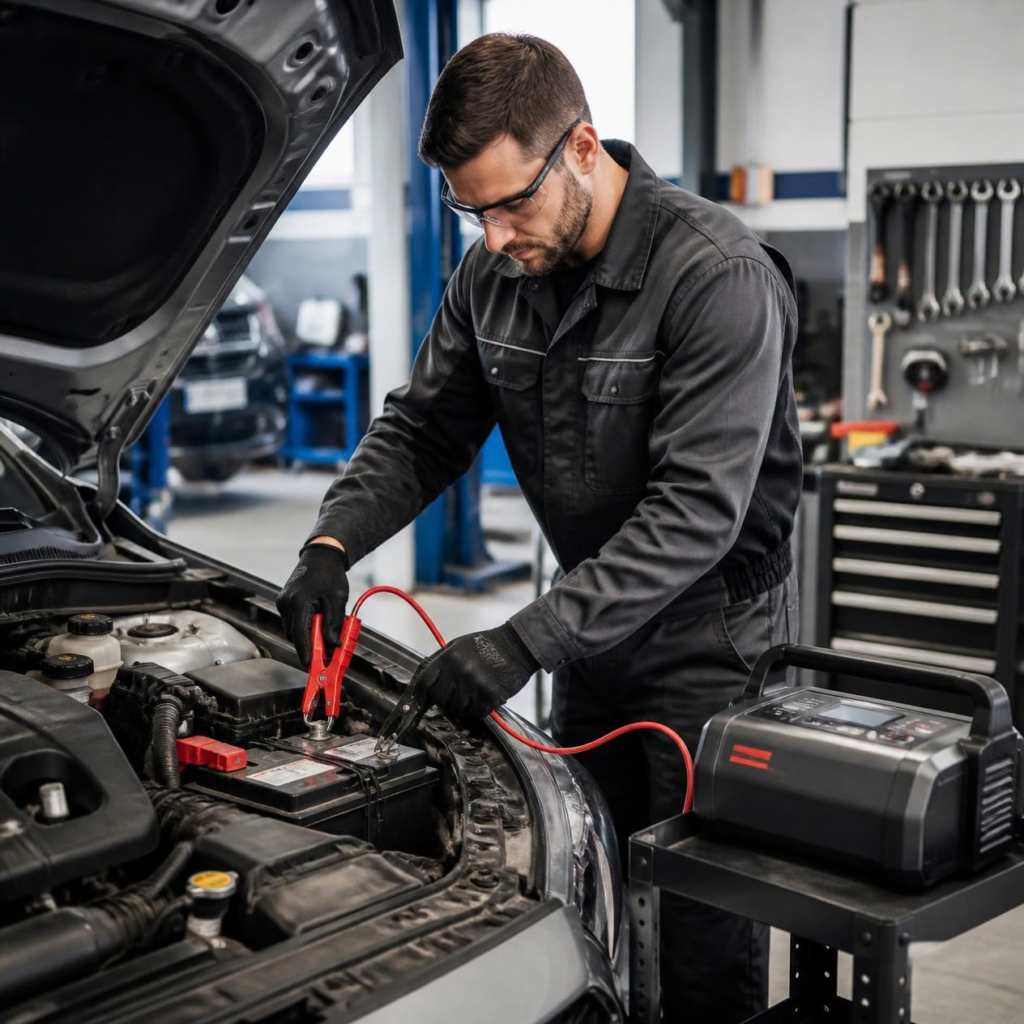
Temperature can affect car battery performance and battery life.
Many parts of India experience very high temperatures during summer. Heat can accelerate battery deterioration, while extreme conditions can affect the chemical processes inside the battery.
If your vehicle is regularly parked in direct sunlight for long periods, try to use shaded or covered parking when practical.
This does not mean that every battery exposed to sunlight will fail quickly. Battery lifespan depends on several factors, including battery quality, vehicle usage, climate, charging-system condition, and maintenance.
Still, protecting your vehicle from excessive heat wherever possible is a sensible habit.
7.Do Not Ignore Long Periods of Inactivity
A car that remains parked for a long period can still experience battery discharge.
Even when the engine is switched off, some vehicle systems continue to consume a small amount of electrical power. If the vehicle is left unused for an extended period, the car battery can gradually lose charge.
If you know that your car will remain parked for a long time, consider asking a qualified professional about the appropriate battery-maintenance method for your vehicle.
Avoid randomly disconnecting electrical components if you are unsure about the vehicle’s requirements. Modern cars can contain electronic systems that may require specific procedures after power is disconnected.
If the vehicle has been sitting unused and does not start, have the battery tested rather than repeatedly attempting to start it.
8.Know When Your Battery May Need Replacement
No battery lasts forever.
The actual service life depends on the battery type, vehicle, climate, driving habits, electrical load, and maintenance. Therefore, there is no single replacement date that applies to every car.
Instead of replacing a car battery based only on age, pay attention to its performance.
Possible warning signs include:
Repeated starting difficulties
Slow engine cranking
Dim lights when starting
Frequent need for jump-starting
Battery warning indications
Visible corrosion or damage
A battery that repeatedly loses charge
If these symptoms appear, get the battery tested.
Replacing a battery before complete failure can be more convenient than discovering the problem when you are away from home, at work, or on a long journey.
9.Get the Charging System Checked
A battery problem is not always caused by the battery.
Your vehicle’s alternator and charging system are responsible for supplying electrical power while the engine is running and helping recharge the battery.
If the alternator is not charging correctly, even a relatively new battery can become discharged.
This is why professional battery diagnosis may include checking:
Battery voltage
Battery condition
Alternator output
Battery terminals
Electrical connections
Possible parasitic electrical drain
If you replace the battery without identifying an underlying charging problem, the new battery could also experience problems.
For this reason, proper diagnosis is an important part of effective car battery maintenance.
How Often Should You Check Your Car Battery?
There is no universal inspection schedule that works for every vehicle. However, checking the battery during regular servicing is a good habit.
You should also consider having the battery inspected if you notice changes such as slow starting, repeated discharge, electrical problems, or warning lights.
Drivers who frequently travel in heavy traffic, make many short trips, park their vehicles for long periods, or drive in very hot conditions may benefit from paying closer attention to battery performance.
Regular checks are generally easier and less expensive than dealing with an unexpected breakdown.
What Should You Do If Your Car Battery Dies?
If your car suddenly does not start, avoid repeatedly turning the ignition on and off.
First, check whether the dashboard lights or other electrical systems show signs of battery power. If the battery appears completely discharged, you may need professional assistance or an appropriate jump-start procedure.
If you jump-start the vehicle successfully, do not assume that the problem has been permanently solved.
The battery may be weak, the charging system may have a problem, or an electrical component may be draining the battery. A proper inspection can identify the cause.
If the battery repeatedly dies, simply charging or jump-starting it may only provide a temporary solution.
Car Battery Maintenance for Long-Term Reliability
Good battery care is not about performing complicated procedures every week. It is mainly about developing simple habits and responding to warning signs early.
Keep the terminals and connections in good condition, avoid unnecessary electrical loads when the engine is off, pay attention to slow starting, and have the charging system checked when necessary.
Indian driving conditions can vary significantly between regions. Hot weather, traffic, short journeys, and extended periods of vehicle inactivity can all influence battery performance. Understanding how your driving habits affect the battery can help you take better care of your vehicle.
Most importantly, do not wait for a complete battery failure before taking action.
Final Thoughts
Car battery maintenance is a simple but important part of responsible vehicle ownership. A battery may be small compared with other major vehicle components, but its failure can prevent your car from starting and disrupt your daily travel.
Regular inspection, clean connections, sensible use of electrical accessories, attention to starting performance, and timely professional checks can help reduce unexpected battery-related problems.
If your car shows repeated starting difficulties, battery warning signs, or electrical issues, consult a qualified car mechanic rather than replacing components without diagnosis.
Taking a few minutes to pay attention to your battery can help you avoid the inconvenience of an unexpected breakdown and keep your vehicle ready for the road.